 CCPTR,
  Confederation with Confederation of Indian Industry(CII)


 National Skill Development Corporation
 DGCA-Approved for Dangerous Goods Training(DGR)
 Ministry of Education
 MoE's Innovation Cell
 Institution's Innovation Council
 AICTE Approved
 We Offer Student Credit Card (Authorized by The Government of West Bengal)

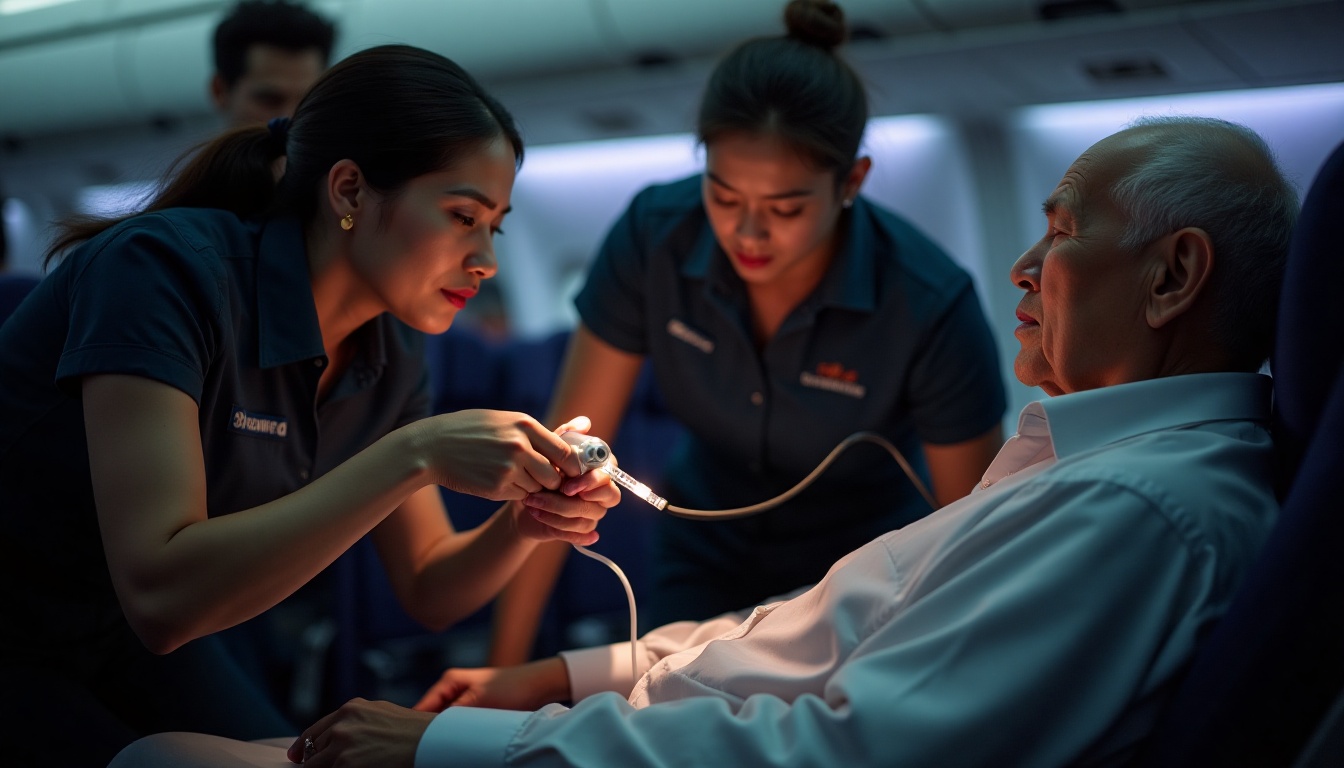
Flying at 35,000 feet is a marvel of modern engineering, but when a medical emergency occurs onboard, it can be a daunting situation. The confined space, limited medical resources, and the inability to land immediately make handling such situations challenging. Yet, cabin crew members, often seen as the face of hospitality, are trained rigorously to act as first responders in the sky.
This blog explores the role of cabin crew during in-flight medical emergencies, their training, protocols, and the essential skills they bring to these high-pressure situations.
The Unpredictable Nature of Medical Emergencies
Medical emergencies onboard flights can range from minor issues, such as headaches or nausea, to severe conditions like cardiac arrests, strokes, or allergic reactions. Statistically, these incidents occur in approximately 1 in every 600 flights, highlighting the need for cabin crew to be prepared for the unexpected.
Passengers come from diverse backgrounds, bringing with them varying health conditions. Cabin crew are trained to remain calm under pressure, assess situations quickly, and provide the necessary support until professional medical help is available.
Rigorous Training for High-Pressure Scenarios
Cabin crew undergo extensive training to handle medical emergencies. While they are not medical professionals, their preparation equips them to stabilize situations until a doctor, if onboard, or emergency responders on the ground can take over.
Key areas of their medical training include:
• First Aid and Basic Life Support (BLS)
Cabin crew learn how to perform CPR, use automated external defibrillators (AEDs), and manage choking or unconsciousness. These skills can be lifesaving, especially in cases of cardiac arrest.
• Recognizing Symptoms
Training includes identifying symptoms of common in-flight emergencies, such as heart attacks, strokes, or diabetic complications. Quick recognition allows for timely intervention.
• Using the First Aid Kit and Medical Supplies
Flights are equipped with comprehensive first aid kits and emergency medical kits. Cabin crew are trained to use these resources effectively, from administering oxygen to using EpiPens.
• Communication and Coordination
Handling emergencies involves clear communication with the cockpit crew, passengers, and, if necessary, medical professionals on the ground. Cabin crew must relay accurate information while keeping passengers reassured.
Protocols for Handling In-Flight Emergencies
When a medical emergency arises, cabin crew follow a structured protocol to ensure swift and effective action.
• Assessing the Situation
The first step is identifying the severity of the emergency. A crew member approaches the passenger to evaluate their condition, asking questions and observing symptoms to understand the issue.
• Seeking Medical Assistance Onboard
If the situation requires advanced care, an announcement is made to identify any doctors, nurses, or paramedics among the passengers. Many airlines have policies offering incentives to medical professionals who assist during emergencies.
• Administering Immediate Care
Until a professional steps forward, the cabin crew administers first aid. This could involve providing oxygen, performing CPR, or ensuring the passenger’s airway remains clear.
• Consulting Ground Medical Support
Airlines often have partnerships with ground-based medical services, which the cockpit crew can contact for advice. These experts guide the crew on whether the flight needs to be diverted for an emergency landing.
• Preparing for Landing
If the emergency warrants an unscheduled landing, the cabin crew works to prepare the passenger and ensure the aircraft is ready for a quick evacuation by emergency responders upon arrival.
Challenges of Managing In-Flight Medical Emergencies
Handling medical emergencies in-flight comes with unique challenges:
• Limited Resources
Aircraft carry only basic medical supplies. While these can address common emergencies, they may not suffice for complex cases, making quick decision-making crucial.
• Altitude and Cabin Pressure
High altitudes and reduced cabin pressure can exacerbate certain medical conditions, such as respiratory issues or circulatory problems, adding complexity to treatment.
• Confined Space
The tight quarters of an airplane cabin make maneuvering and providing care more difficult, especially if the flight is fully booked.
• Passenger Reactions
Emergencies can unsettle other passengers, creating a secondary challenge of managing the cabin environment and ensuring calmness.
• Stories of Heroism in the Skies
Behind every successful medical intervention is a story of teamwork and bravery. Cabin crew members often go above and beyond to save lives.
Take the example of a flight attendant who performed CPR for nearly 20 minutes to stabilize a passenger until the flight could land. Or the crew member who used her training to assist a passenger having a severe allergic reaction, effectively administering an EpiPen and keeping them conscious until help arrived.
These stories highlight the crucial role of cabin crew as unsung heroes, ensuring passenger safety even in the most challenging circumstances.
What Passengers Can Do:- While cabin crew are well-trained, passengers can also play a role in ensuring a smoother resolution of medical emergencies:
Inform the Crew Early
If you or someone near you feels unwell, inform the crew immediately. Early intervention can prevent minor issues from escalating.
Carry Necessary Medications
Always keep essential medications in your carry-on bag. Inform the crew if you have a condition that may require special attention.
Stay Calm and Cooperative
During emergencies, follow the crew's instructions and avoid crowding the area. Calmness can help the crew focus on their tasks.
Medical emergencies on flights can be daunting, but cabin crew members are trained to handle these situations with skill and composure. Their extensive training, quick decision-making, and compassionate care are vital in ensuring passengers' safety and well-being. To gain these essential skills, opt for the best air hostess course at the top air hostess training college in Kolkata.

Leave a comment